A limited repair
Cost depends on the opening, preparation, access and the membrane area that must be replaced. A failed curb corner takes different work from an accessible puncture in the field. Hidden wet material can expand either job.
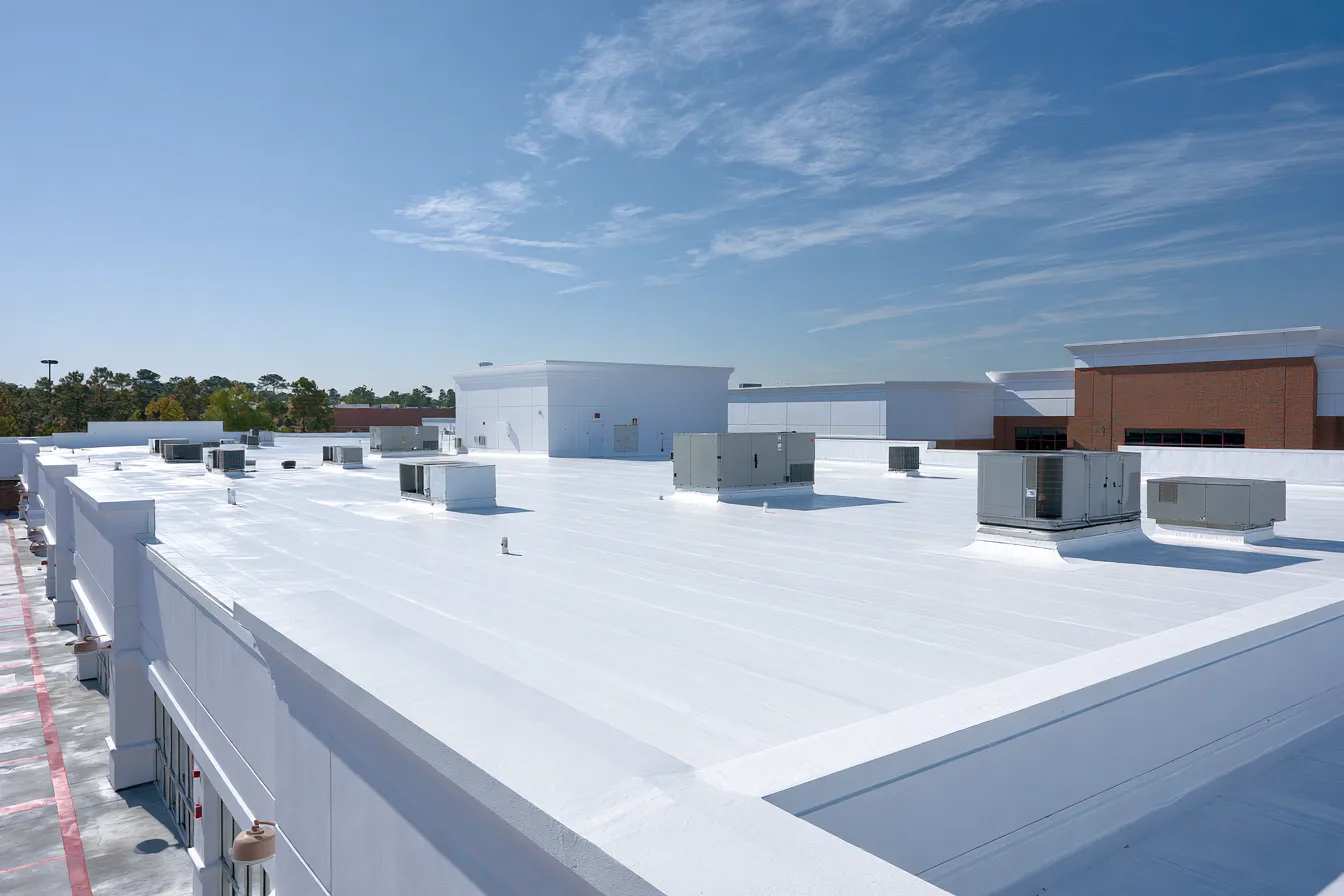
Get Glenn Heights TPO roofing help for seams, punctures, equipment curbs and replacement planning. Assess the membrane and the layers beneath it.
A TPO roof uses thermoplastic membrane sheets joined by heat-welded seams. Its job depends on more than the white surface: the sheet must be supported and attached appropriately, and the membrane has to connect around equipment, at drains and along the perimeter.
A local opening may be repairable when the surrounding membrane is sound and can receive a compatible welded repair. If moisture has spread into insulation, attachment is failing or the sheet is broadly deteriorated, a surface patch leaves a different problem underneath.
We help Glenn Heights building owners assess TPO repair and replacement in the context of the existing assembly. A free roof inspection begins with the leak or project you have in mind and the system already on the building.
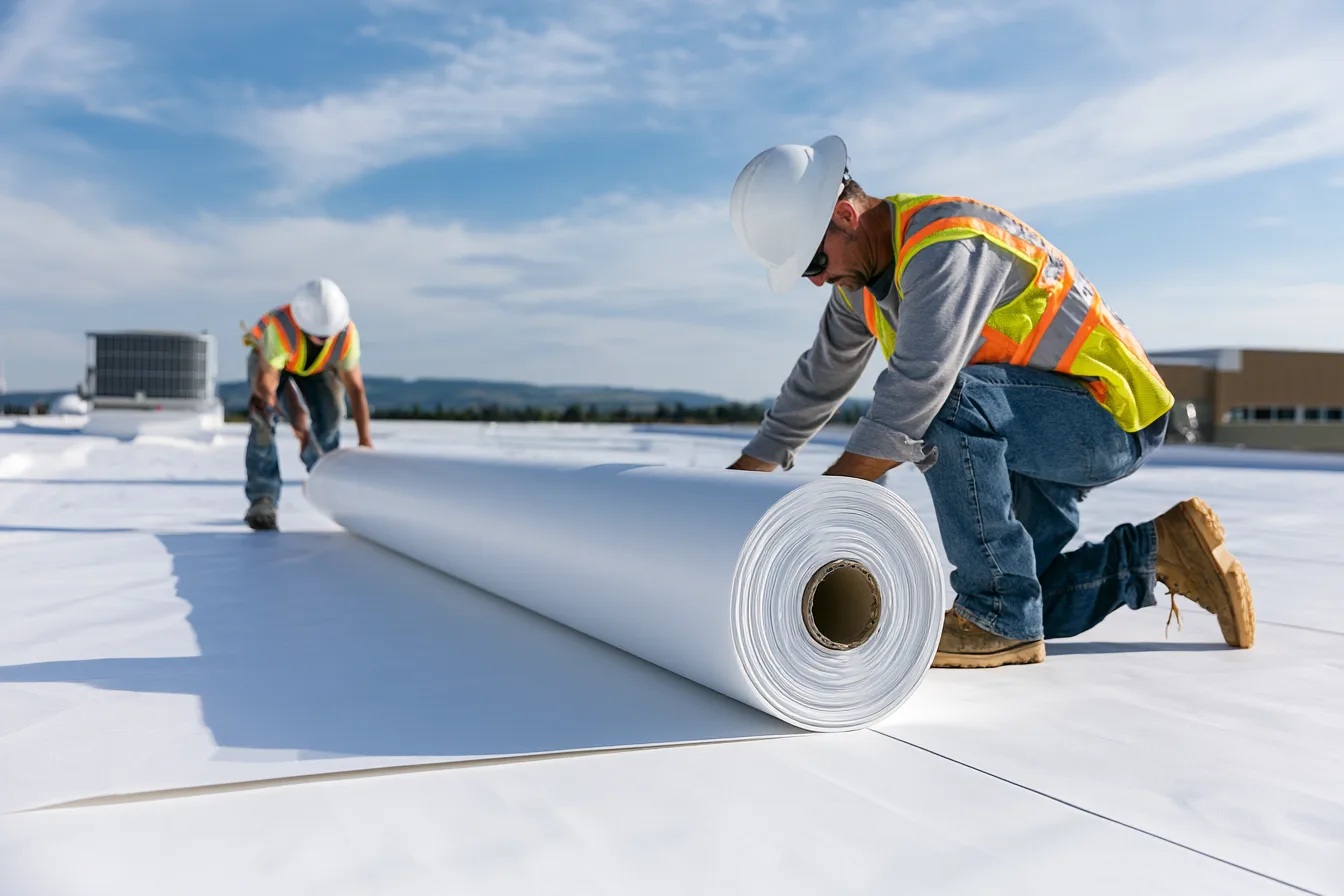
The field membrane, seams and terminations need to work as a connected covering. Equipment service routes can add wear near curbs and penetrations, while movement and attachment conditions can place stress on joints.
Repair preparation is specific to the membrane and its condition. Dirt, coatings, weathered surfaces or incompatible previous patches can affect the ability to make a reliable connection. The selected repair needs to follow the applicable system instructions.
Assess separated joints, punctures and prior repairs, including whether adjacent sheet material can be cleaned and prepared for the proposed weld.
Examine curb corners, pipes and other interruptions where membrane flashing changes direction.
Consider edge restraint and the attachment of the membrane and layers beneath it. A leak repair cannot correct a systemwide attachment problem by itself.
Visible surface condition cannot prove the insulation is dry. Further evaluation may be needed when the leak history or roof condition suggests concealed moisture.
The system manufacturer’s requirements guide materials and installation details. The specified assembly determines compatible membrane, attachment and finishing details.
Identify the membrane, current roof layers, deck where known, drainage and any previous repair products. This keeps the proposed work compatible with what remains.
A suitable local repair uses prepared, sound membrane and compatible material. Wet insulation or an unsound base must be addressed rather than sealed beneath another patch.
For replacement, define removal, deck repairs, insulation, attachment and the membrane details together. Drainage improvements may involve the insulation layout or other work beyond the sheet.
Arrange service access, work zones, deliveries and any equipment-related trade work. Where appropriate to the system, protective walkways can help manage regular rooftop traffic.
Cost depends on the opening, preparation, access and the membrane area that must be replaced. A failed curb corner takes different work from an accessible puncture in the field. Hidden wet material can expand either job.
Replacement brings deck condition, insulation, attachment, perimeter details and material handling into the scope. Compare the assembly being renewed, not just the thickness or color of the new membrane.
The commercial roofing overview connects those roof choices with occupied-building planning.
No. White appearance does not identify the membrane chemistry. The existing system must be identified, and the repair material and preparation must be compatible with it.
Sometimes, but the sheet condition, contamination, original detail and available sound material matter. A compatible patch or replacement of a larger detail may be needed instead of reheating an unsuitable seam.
Only if the scope addresses the affected insulation and other damaged layers. A new sheet over unresolved moisture can leave the underlying problem in place.
Access needs to be coordinated with the building owner and responsible service trades. Roof openings, work zones and equipment connections determine what restrictions are necessary.
Need help with a TPO roof in Glenn Heights? Tell us about the building and the roof concern, and request a free inspection.