Sound roof around a local opening
A compatible repair can be useful where the surrounding covering and supporting layers remain sound. The scope should include preparation, the failed detail and a suitable connection beyond it.
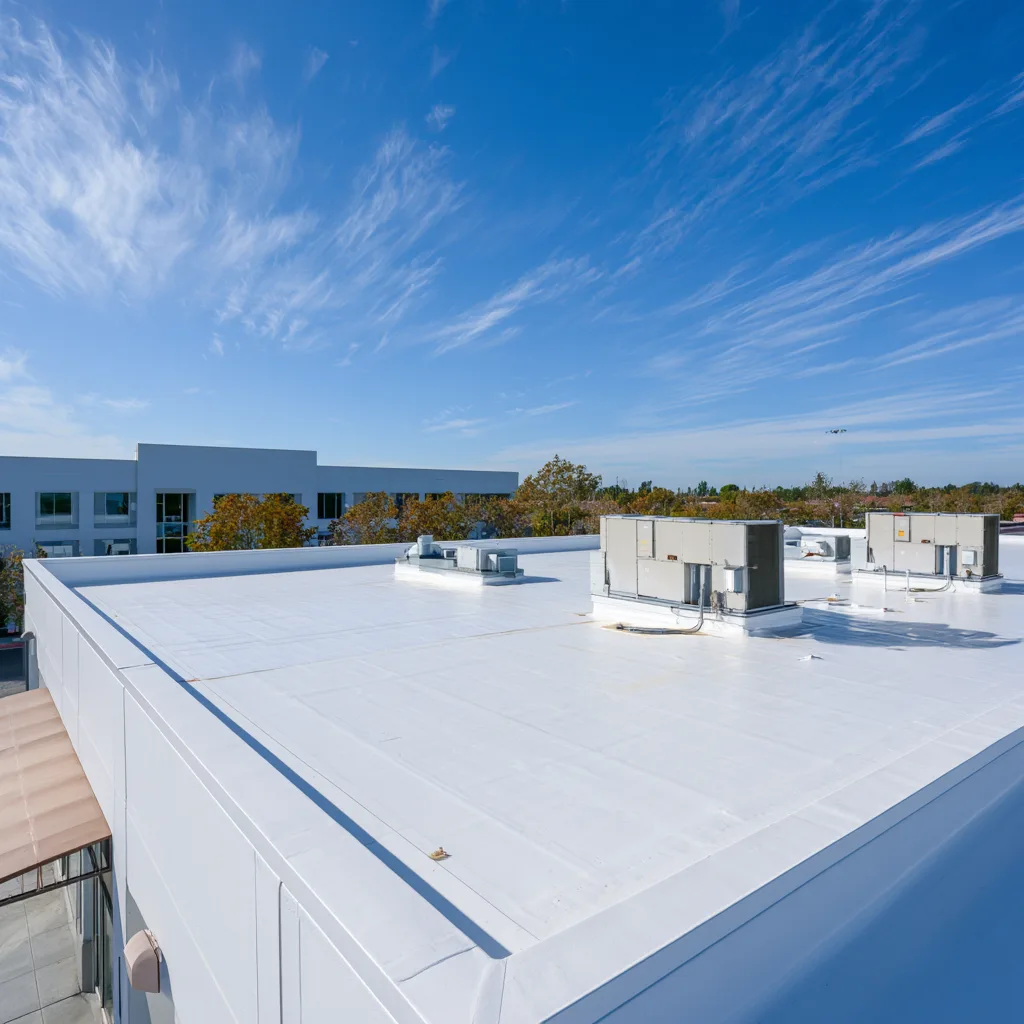
Get Glenn Heights flat-roof repair help for drains, seams, curbs and damaged membrane. Learn when a local repair should become a replacement plan.
A commercial “flat” roof still needs to move water. Its low slope directs runoff toward drains, scuppers or roof edges, and every seam, curb and penetration must keep that water above the covering. A leak can begin at one of those details even when the broad surface looks serviceable.
The repair starts by identifying the existing system. Thermoplastic sheet, rubber membrane and asphalt-based coverings require different compatible materials and methods. Applying a familiar patch without checking the roof can create another weak connection.
We help Glenn Heights building owners trace low-slope leaks and define the repair around the affected area. The explanation includes what can remain and whether moisture or attachment problems reach farther than the visible opening.
Water can travel within the assembly before appearing in the tenant space below. The interior leak location helps orient the investigation but does not identify the roof opening by itself.
| Location | What needs investigation | Repair implication |
|---|---|---|
| Sheet seams or previous patches | Whether the joint opened, the material deteriorated or the earlier repair was incompatible. | Prepare and reconnect sound material using the method suited to the identified system. |
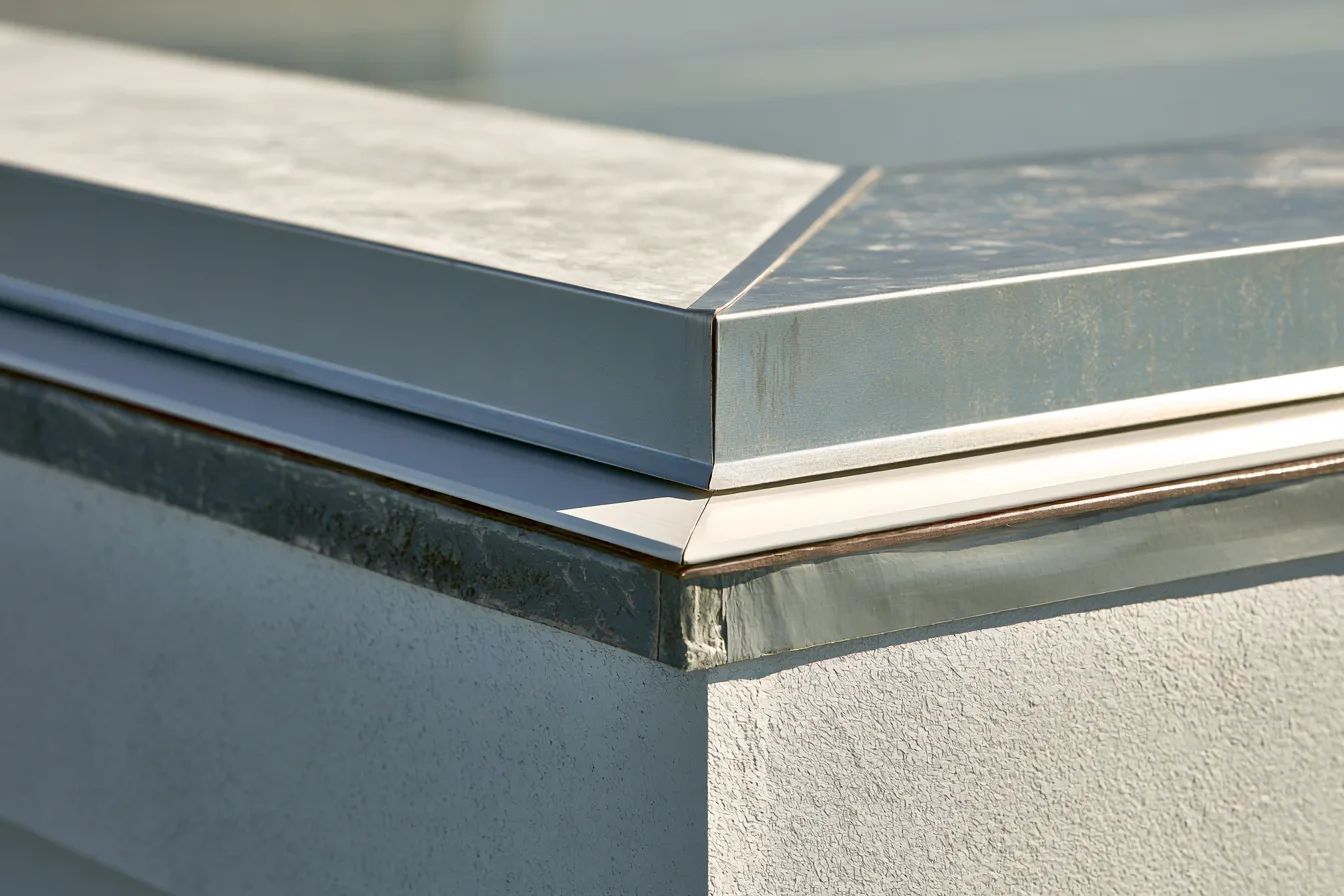
| Equipment curbs and pipes | Corners, flashing height, transitions and movement around the penetration. | Rebuild the affected flashing detail and coordinate equipment work when it is needed for access. |
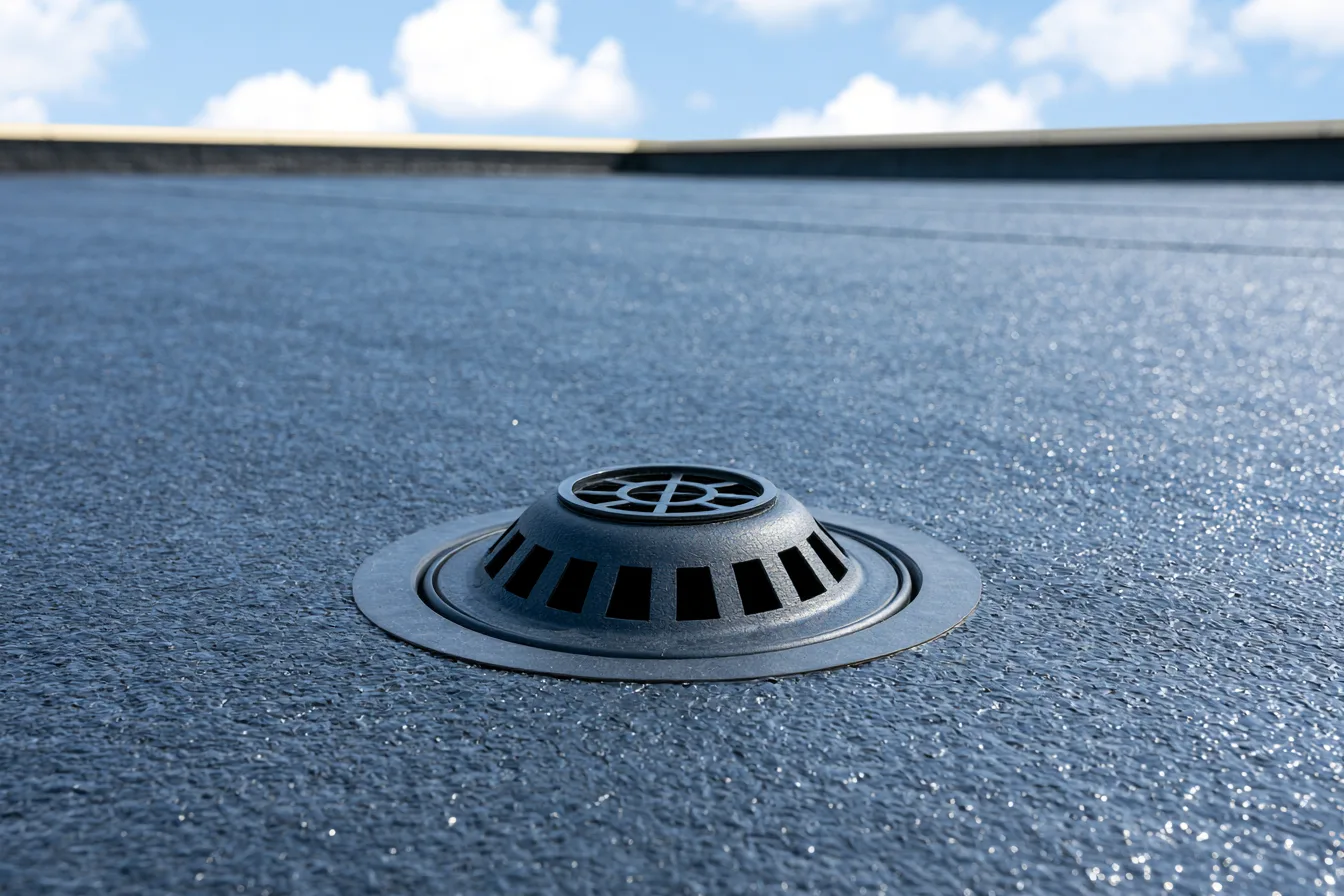
| Drains and scuppers | Obstruction, connection to the covering and the roof’s route toward the outlet. | Clearing debris, repairing the drain detail and changing slope are different scopes. |
| Roof perimeter | Edge metal, membrane termination and attachment of adjacent layers. | The repair must maintain both the water-shedding connection and suitable restraint at the edge. |
When water collects near a drain, the first question is whether the outlet is obstructed or whether the roof no longer directs water to it. Clearing leaves or debris may restore flow where the drainage arrangement is otherwise sound. It cannot remove a low area created by the assembly’s shape.
A drainage correction may involve tapered insulation, changes to an outlet or other roof work. If sagging or structural movement is suspected, that requires the appropriate assessment rather than a surface patch.
A new coating does not create roof slope. The selected materials also have their own standing-water limits. The work should address both the water path and the detail that is leaking.
A compatible repair can be useful where the surrounding covering and supporting layers remain sound. The scope should include preparation, the failed detail and a suitable connection beyond it.
Wet insulation, insecure attachment or deck damage can require removal over a larger area. Surface appearance alone cannot show where that condition stops.
Numerous failing repairs or broad deterioration make replacement a useful comparison. The question is which scope restores the roof without leaving known defects concealed.
See commercial roofing options for the relationship between local repair, restoration and replacement.
Not by itself. The cause, duration and location of standing water, the roof system and the condition underneath all matter. An obstructed outlet and a roof with inadequate drainage geometry need different work.
Often the work can be arranged around building use, but access, roof openings, equipment and weather exposure determine the restrictions. Discuss sensitive areas and needed access before the scope is finalized.
Water can affect insulation or decking beyond the opening. A repair also needs enough sound material around it for a compatible connection. The exposed condition determines the boundary.
No. Repair methods depend on the covering. Some thermoplastic systems use heat-welded connections; other membranes and asphalt-based roofs use different compatible methods.
Tell us where the building is leaking and how the space below is used. A free inspection can help define the flat-roof repair and its practical arrangements.