Why a roof leak can return after a patch

A roof patch can look closed and still leave a route for water. When a leak returns, the useful question is what the patch repaired and what the water can still get around. Another layer in the same place may not answer that question.

Ask about your roof

A patch can cover the symptom instead of the opening

The place where water appears indoors is the end of part of its journey. It may have entered farther up the roof, followed a piece of framing or passed behind a wall covering before reaching the ceiling. A patch placed directly above the stain can miss that original opening.

Even a patch at the correct detail can leave another path nearby. At a pipe, the collar around the pipe and the flashing base within the shingles perform different jobs. Sealing one does not necessarily restore the other. At a wall, a visible bead along the siding does not reveal how the concealed flashing overlaps with the wall’s drainage layer.

Why sealant cannot rebuild a roof joint

A water-shedding joint works through the relationship of its pieces. Upper layers overlap lower layers so runoff stays outside. Flashing turns water away from an interruption and back onto a suitable surface. That geometry matters even when the joint looks neat from above.

Sealant can be appropriate at a specified connection, but it cannot replace a missing lap, strengthen softened wood or make incompatible materials move together. A broad surface patch may also hide the detail that the next roofer needs to examine.

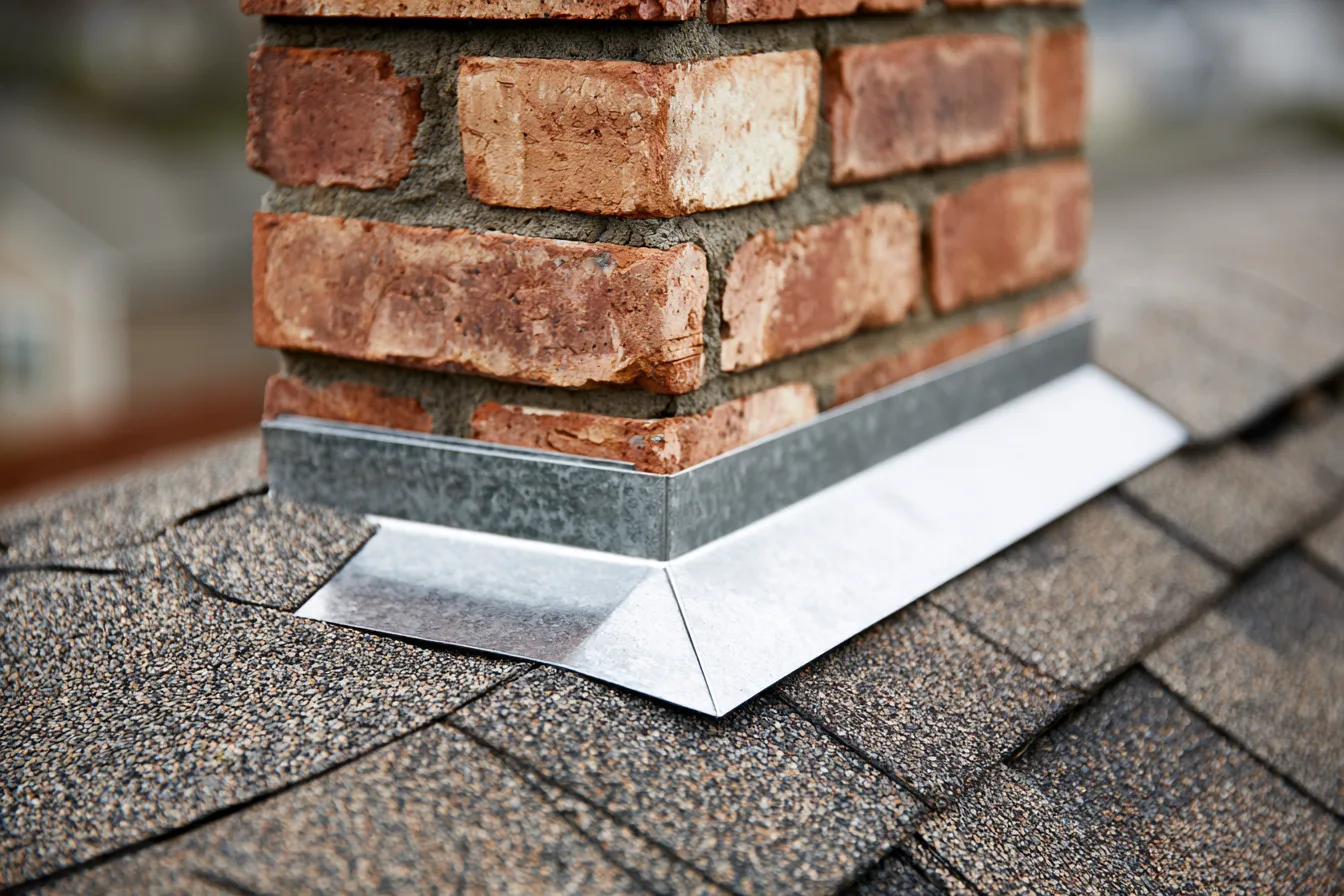
At the chimney, base flashing works with counterflashing above it to guide water onto the roof. Rebuilding a failed overlap can require access beyond the visible metal edge.

Counter-flashing set into brick mortar joints
Roof-to-chimney flashing at the masonry joint.

What a useful second look examines

A second inspection should relate the leak pattern to the previous work. What material was added? Which detail was opened? Did the work address the actual entry point, or only the visible gap? The roofer then considers the covering, flashing and base around that repair.

You can help with the history you already know, such as when the leak returns and what work was performed. There is no need to climb onto the roof, remove a ceiling panel or test the leak yourself. Suitable access and investigation belong with the roofing work.

For the service itself, roof leak repair explains how the water path and repair boundary are assessed.
Deciding between another repair and more work

A returning leak does not automatically call for a new roof, but it does call for a better explanation of the cause.

A local connection can be rebuilt

If the failure is confined to one detail and the nearby roof remains sound, removing the earlier patch and rebuilding that connection may be the useful repair. It can take more access than the small opening suggests.

The surrounding roof no longer supports it

Brittle covering, repeated failures or damage beneath the surface can change the decision. The explanation should show why a larger repair or replacement addresses more than another patch would.